DIY Wreath Ideas for Beginners: How to Choose a First Wreath
Choose a first wreath by how it is built, what base it uses and where it will hang. Tied and wrapped wreaths are the easiest to correct.
Tutorial at a glance
The best DIY wreath ideas for beginners have one thing in common: the method is simple enough that a mistake can be undone. A first wreath goes well when you choose it by how it is built, not by how the finished picture looks. Two wreaths that look equally easy can need very different tools and very different amounts of patience.
Every wreath comes down to three choices: how the material is fixed to the ring, what the ring is made of, and where the finished piece will hang. Settle those three and the list of possible projects shrinks to two or three.
Start with the Method, Not the Look
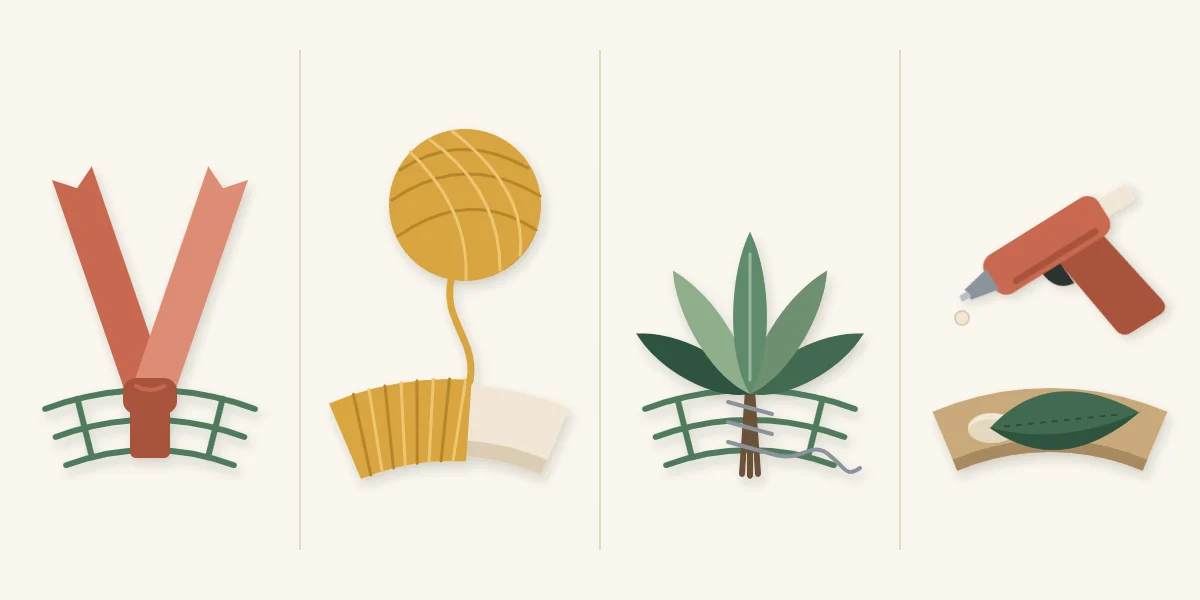
There are four basic ways to build a wreath. Each asks for a different skill and a different kit, so it makes sense to pick the method first and the materials second.
- Tying. Short strips of ribbon or fabric are knotted onto a wire frame. You need scissors and nothing else.
- Wrapping. Yarn, ribbon or fabric is wound around a foam ring until the surface is covered. The only skill is keeping the wraps snug and side by side.
- Wiring. Small bundles of greenery or flowers are bound to a frame with thin wire. This is the classic method for leafy wreaths and takes a little practice to keep tight.
- Gluing. Paper, felt, cones or flower heads are stuck to a flat ring or a foam ring with a hot glue gun. It is fast, but every placement is final. Hot glue and the gun tip burn, so keep fingers clear.
For a first project, choose a wreath that uses only one of these.
Why Tied and Wrapped Wreaths Forgive Mistakes
A knot can be untied and a wrap can be unwound. That is the whole reason tied and wrapped wreaths are kind to beginners. If a color sits in the wrong place, you slide the knot along the wire or take the strip off and tie it somewhere else. If the yarn gaps, you back up a few turns and wind again. Nothing is wasted and the base is never damaged.
These wreaths also hide uneven work. A tied wreath is made of dozens of strips, so one that is a little short disappears among the others.
Glue is the opposite. Once a paper leaf is pressed into hot glue it stays there, and pulling it off usually tears the leaf or the surface of the ring. Wiring sits in between: a bundle can be unwound, but a loose binding lets stems slip later, and you only find out when you lift the wreath upright.
Tip
If you want to try a glued wreath first, lay every piece on the ring dry and check the arrangement before you pick up the glue gun. Glue only when nothing needs to move.
Match the Base to the Method
The wreath base decides which methods are possible. A wire frame has open rings to tie and bind around, but nothing to push a pin into. A foam ring takes pins, glue and wrapping, but ribbon knots slide on it. A grapevine base lets you tuck stems between the vines. A hoop is thin and stays mostly visible, so it suits a small spray, not full coverage.
For a first wreath, a wire frame or a hoop about 12 in (30 cm) across is a manageable base size. Smaller rings are fiddly to work around, and larger ones need far more material than most beginners expect. The finished wreath will measure wider than the base once ribbon ends or leaves stick out past it. The comparison of wreath bases explains what each one holds well and how much of it shows through.
Think About Where It Will Hang
Decide where the wreath will hang before you buy materials, because the spot rules some materials out.
A covered front door is sheltered from direct rain, but it still gets damp air, wind and some sun. Ribbon, fabric and faux greenery are reasonable choices there. Sun, rain, wind and humidity change every material over time, faux ones included, so a porch or a door with an overhang is kinder than a fully exposed one.
An indoor wall opens up the delicate options: paper, felt, yarn and dried flowers. These do not cope with damp, and paper and dried stems must stay well away from candles, fireplaces, heaters and bulbs.
First Wreaths Compared
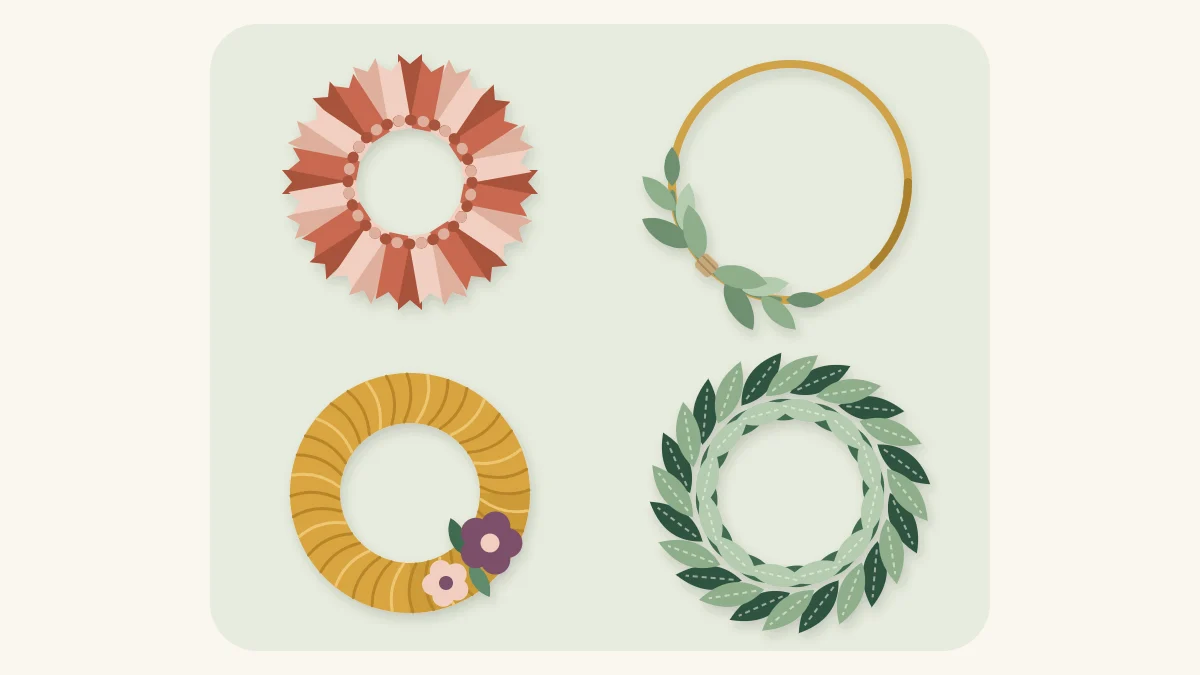
These four wreaths each use a single method and a short tool list.
| Wreath | Method | Base | Tools |
|---|---|---|---|
| Tied ribbon wreath | Tying | Wire frame | Scissors |
| Yarn-wrapped wreath | Wrapping | Foam ring | Scissors |
| Hoop with a greenery spray | Wiring | Metal or wooden hoop | Wire cutters, floral wire |
| Paper leaf wreath | Gluing | Flat cardboard ring | Scissors, hot glue gun |
The ribbon wreath on a wire frame is the most forgiving of the four, and it is suited to a covered door. The minimalist hoop wreath uses the least material and teaches the basic binding skill on just two or three stems. The layered paper leaf wreath is a calm introduction to gluing, because every leaf is the same shape and goes on in the same direction.
Buy for One Project
It is tempting to buy a full kit before you start. A better plan is to choose one wreath, read its materials list and buy only that. A tied wreath needs a frame, ribbon and scissors. A hoop wreath adds wire cutters and a small amount of floral wire. A glue gun can wait until a project calls for it.
When you are ready to build a kit, the basic wreath making supplies guide lists what each tool does and what can stand in for it.
A Simple Way to Decide
If you are still unsure, work through the choices in order.
- Pick the spot. A covered door points to ribbon, fabric or faux greenery. An indoor wall allows paper, yarn, felt and dried material.
- Pick the method. Choose tying or wrapping if you want room to correct mistakes, wiring if you want to learn the skill most leafy wreaths rely on, and gluing if you are comfortable planning the layout first.
- Pick the base that suits that method, at a size near 12 in (30 cm).
- Limit the colors to two or three. A short palette looks deliberate even when the spacing is uneven.
Frequently asked questions
What is the easiest wreath for a complete beginner?
A tied ribbon or fabric wreath on a wire frame is the easiest starting point. It needs only scissors, and any strip that sits in the wrong place can be untied and moved. The full, slightly irregular surface also hides uneven knots.
What size wreath base should a beginner buy?
A base about 12 in (30 cm) across is a manageable size for a first project. Smaller rings are fiddly to work around and larger ones need much more material. The finished wreath will be wider than the base once the materials stick out past the ring.
Do I need a glue gun to make a wreath?
No. Tied, wrapped and wired wreaths need no glue at all. A hot glue gun is useful for paper, felt and cones, so it can wait until you choose a project that calls for it.