How to Hang a Wreath Without Nails: Doors, Walls and Mirrors
Four ways to hang a wreath without nails, plus an option for glass, and how to add a hanging loop and felt pads so the wreath sits flat and the door stays unmarked.

Tutorial at a glance
Materials
- Over-the-door hanger, removable adhesive hook, magnetic hook or suction hook to suit the surface
- Wide ribbon for hanging over the door top
- Floral wire for a hanging loop
- Wire cutters
- Small round felt pads
- Kitchen or luggage scale
Learning how to hang a wreath without nails comes down to matching the hanger to the surface. A paneled wooden door, a steel door, a painted wall and a mirror each hold a hook differently, and a method that works well on one can slip or leave a mark on another.
This guide covers the four methods that suit most doors and walls, a fifth option for glass, and two small jobs on the back of the wreath that make every method work better: a firm hanging loop and a couple of felt pads.
Start with the Wreath: Weight, Depth and Loop
Before choosing a hanger, pick the wreath up. A ribbon wreath on a wire frame weighs very little. A grapevine base loaded with pinecones is a different object, and so is anything built on a thick straw ring. The comparison of wreath bases explains which bases run heavy before anything is added to them.
Every hook and hanger sold for this job comes with a weight rating and a list of surfaces it suits. Weigh the finished wreath on a kitchen or luggage scale, then choose a hanger whose rating clearly covers that number. If the packaging gives no rating, choose a different hanger rather than guessing.
The Four Main Ways to Hang a Wreath Without Nails
These four cover nearly every door and most walls, and each has its own limits.
Over-the-door hanger
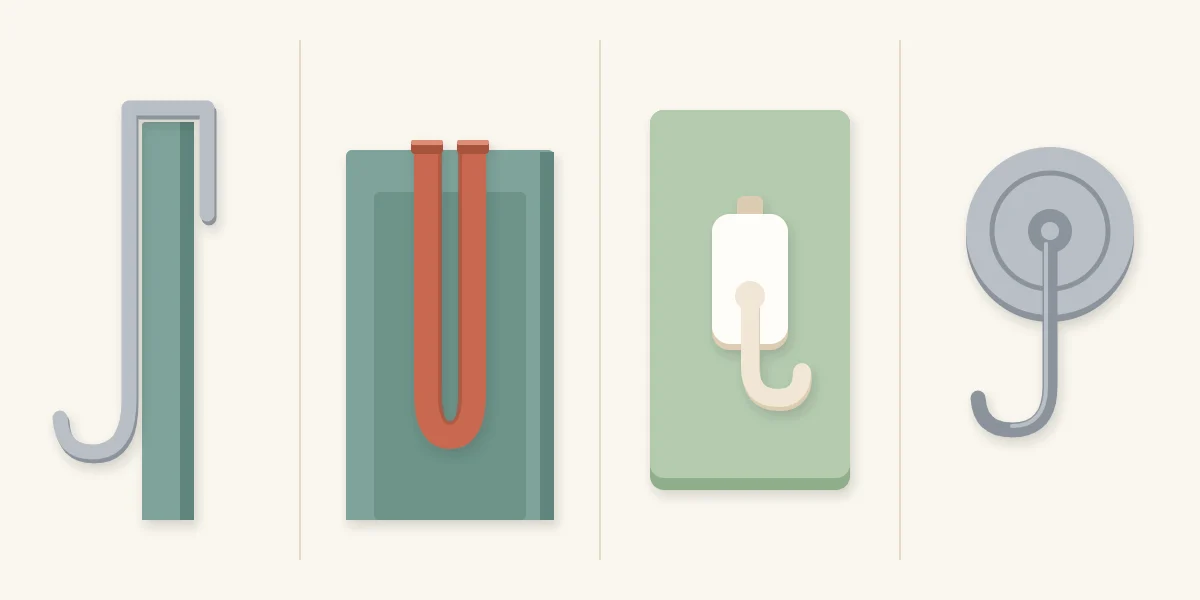
A flat metal strip hooks over the top edge of the door and ends in a hook on the front. Check that the door still closes fully with the strip in place, because a tight frame or thick weatherstripping may not leave room. Hangers come in different lengths, so pick one that puts the wreath at about eye level.
Ribbon over the top of the door
Loop a wide ribbon through the wreath, run both ends up and over the top edge of the door, and fix them on the inside face. An upside-down adhesive hook on the inside works, and so does a flat thumbtack pressed into the top edge of a wooden door, where the hole is never seen. The ribbon lies flatter than a metal hanger, so it suits doors with little clearance.
Removable adhesive hook
These hooks stick with a stretch-release strip. They suit smooth, clean, sealed surfaces: painted doors, finished wood, tile, some metals. Follow the maker’s instructions exactly for cleaning the surface, pressing the strip and waiting before you load the hook, and stay within the stated weight rating. Textured paint, fresh paint, wallpaper and rough wood are common exclusions, so read the surface list on the pack.
Magnetic hook
A magnetic hook grips a steel door with no adhesive at all. Test your door with a fridge magnet first, since many doors that look like metal are fiberglass or wood. Magnets hold much better against a straight downward pull than against sliding, so check the maker’s rating for the way the hook will actually be used, and put a thin felt pad behind it if the base could scratch the paint.
Mirrors, Windows and Glass Doors
Glass will not take a tack, and a magnet has nothing to grip. A suction hook is the usual answer. Clean the glass and the cup, press out the air from the center, and use a hook with a locking lever if the wreath has any real weight. Suction can release when the glass warms up or cools down, so keep heavy wreaths off glass.
On a framed mirror, the simplest method is often a ribbon tied around the top of the frame, with the wreath resting against the glass.
Match the Method to the Surface
Use this chart as a starting point, then confirm against the instructions for the product you buy.
| Surface | Method | Watch for |
|---|---|---|
| Wooden or fiberglass door | Over-the-door hanger or ribbon over the top | Door must still close and seal |
| Steel door | Magnetic hook | Sliding; scratches under the magnet |
| Smooth painted wall or door | Removable adhesive hook | Surface list and weight rating on the pack |
| Mirror or window | Suction hook | Release when the glass changes temperature |
| Framed mirror | Ribbon tied to the frame | Wreath pressing on the glass |
Watch out
Never estimate what a hook can carry. Use the maker’s weight rating and surface instructions, and if the wreath is close to the limit, move up to a stronger hanger or split the load across two hooks placed side by side.
Add a Hanging Loop and Felt Pads to the Back
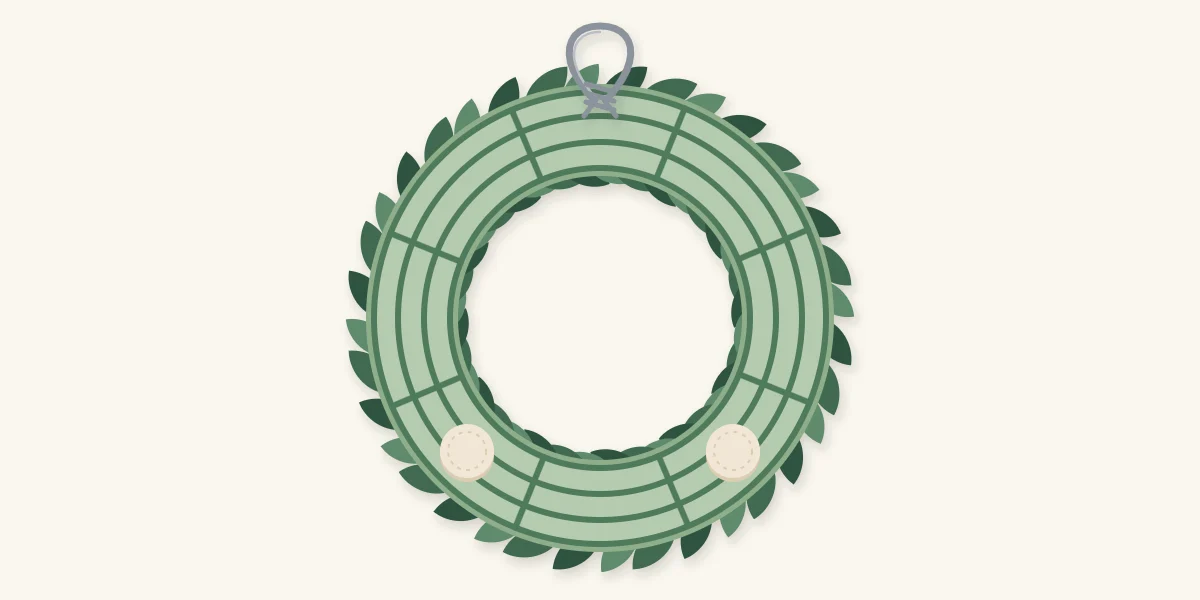
A wreath hung by its frame alone tends to tilt forward and swing. A small dedicated loop fixes that. Cut a short length of floral wire, thread it around the outer ring of the frame at the top center, and twist the ends together into a loop about the width of a finger. Bend the cut ends back into the wreath, because they are sharp and will scratch paint. On a foam ring, tie a ribbon loop around the whole ring instead, since wire cuts into foam.
Then protect the door. Stick two small round felt pads to the back of the wreath near the bottom, one at the lower left and one at the lower right, where the frame touches the surface. They stop wire and vine ends from rubbing the finish each time the door opens and closes, and they keep the wreath from rocking side to side.
Height and Position on the Door
Centering the wreath across the door width and placing its middle at roughly eye level suits most entrances. The guide to sizing a front door wreath covers how wide the wreath should be for the door before you hang anything.
Once it is up, open and close the door several times at normal speed. The wreath should stay put and the hanger should not shift. If it swings, shorten the loop or add a third felt pad.
When the Wreath Comes Down
Remove adhesive hooks the way the maker describes, usually by pulling the tab slowly straight down along the surface rather than toward you. Before packing the wreath away, read the notes on storing wreaths so they keep their shape, and leave the hanging loop on so it is ready next time.
Frequently asked questions
Which hanging method is best for a steel door?
A magnetic hook is usually the simplest choice because it needs no adhesive and lifts straight off. Test the door with a fridge magnet first, since some doors that look like metal are fiberglass or wood. Check the hook maker's rating for the direction of pull, and put thin felt behind the magnet if its base could scratch the paint.
How do I know whether an adhesive hook can hold my wreath?
Weigh the finished wreath on a kitchen or luggage scale and compare it with the weight rating printed on the hook's packaging. Also read the list of suitable surfaces, because textured paint, fresh paint and wallpaper are often excluded. If the wreath is close to the limit, choose a stronger hook.
How can I stop a wreath from scratching the door?
Stick two small felt pads to the back of the wreath near the bottom where the frame touches the door, and bend every cut wire end back into the wreath. A dedicated hanging loop at the top also helps, because it stops the wreath from tilting and rubbing each time the door moves.