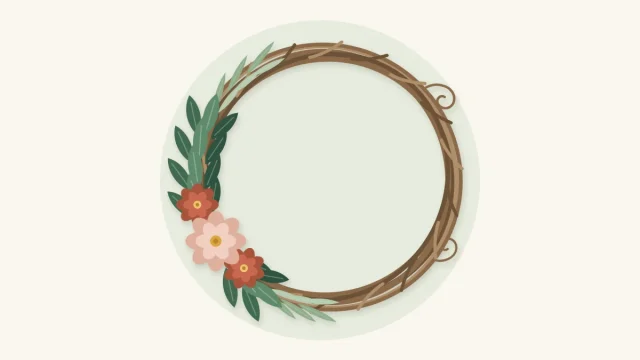
How to Make a Grapevine Wreath Base from Fresh Vines
Cut long flexible vines, form a first circle, weave more lengths around it in the same direction, tuck the ends and dry the ring flat until it is firm.
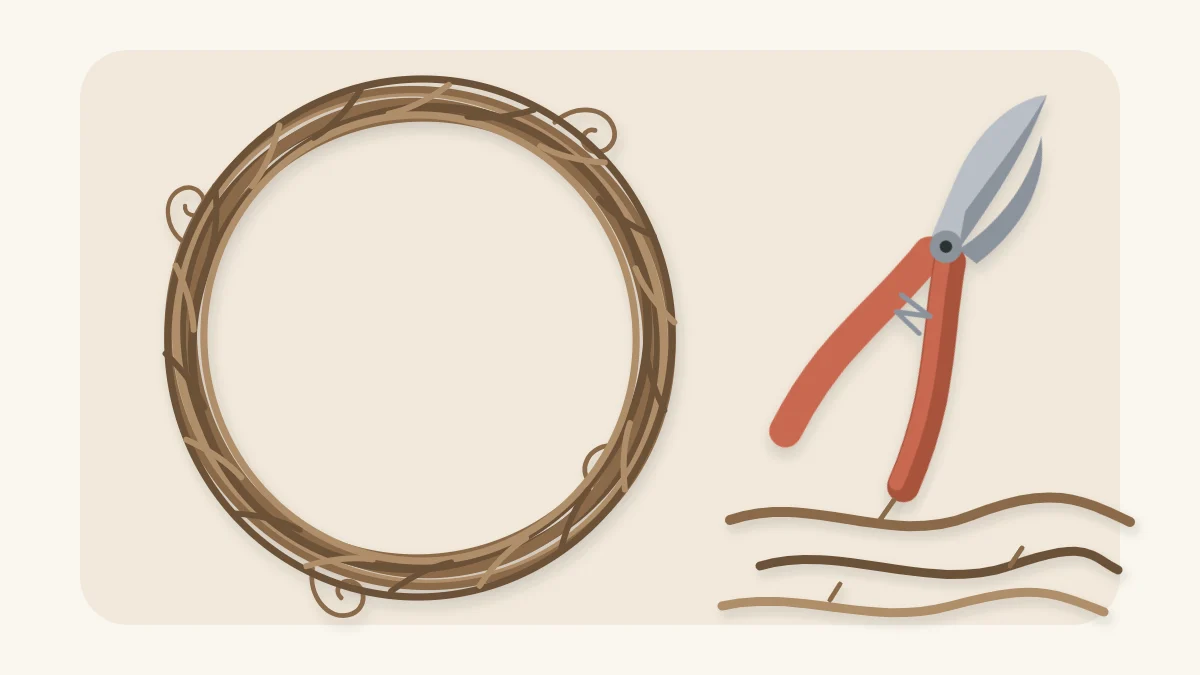
Tutorial at a glance
Materials
- About 8 to 12 long lengths of fresh grapevine
- Hand pruners
- Sturdy gloves
- Tub of water for vines that have dried out
- Twine or wire for temporary ties (optional)
You can make a grapevine wreath base with nothing more than fresh vines, a pair of pruners and your hands. There is no wire, no glue and no frame: the vines are wound around each other while they are still flexible, and they hold the shape once they have dried and stiffened.
The result is rougher and more individual than a bought ring, with tendrils and uneven strands that give it character.
Find and Cut the Vines
Grapevines are pruned hard in the dormant season, so anyone who grows them usually has long lengths to spare. Cut only from your own plants or where the owner has given permission, and do not take vines from parks, reserves or roadsides.
Be certain of the plant before you touch it. Several climbing plants look similar to a casual eye, and some of them cause painful skin rashes. If a vine is not one you can identify with certainty, do not gather it.
Look for long, flexible lengths about as thick as a pencil or thinner. Bend one into a loop in your hands: a good vine curves smoothly, and one that is too old or too dry kinks and splits. Cut the longest pieces you can manage, since long vines mean fewer ends to hide. Pull off the leaves, but leave the curly tendrils on if you like the look.
Watch out
Wear sturdy gloves. Vines are rough, cut ends are sharp and sap is sticky. Keep the pruners closed when you are not cutting, and cut away from your other hand.
What You Need
- About 8 to 12 long lengths of fresh grapevine, more for a thick ring
- Hand pruners
- Gloves
- A tub of water, only if the vines have dried out
- Twine or wire for temporary ties, optional
If the Vines Are Dry
Work with vines soon after cutting them if you can. Vines that have stiffened can often be brought back by soaking. Coil them loosely into a tub, weigh them down so they stay under water, and test one from time to time. They are ready when a length bends into a circle without cracking. A vine that still snaps after soaking is too far gone for weaving.
Form and Weave the Ring
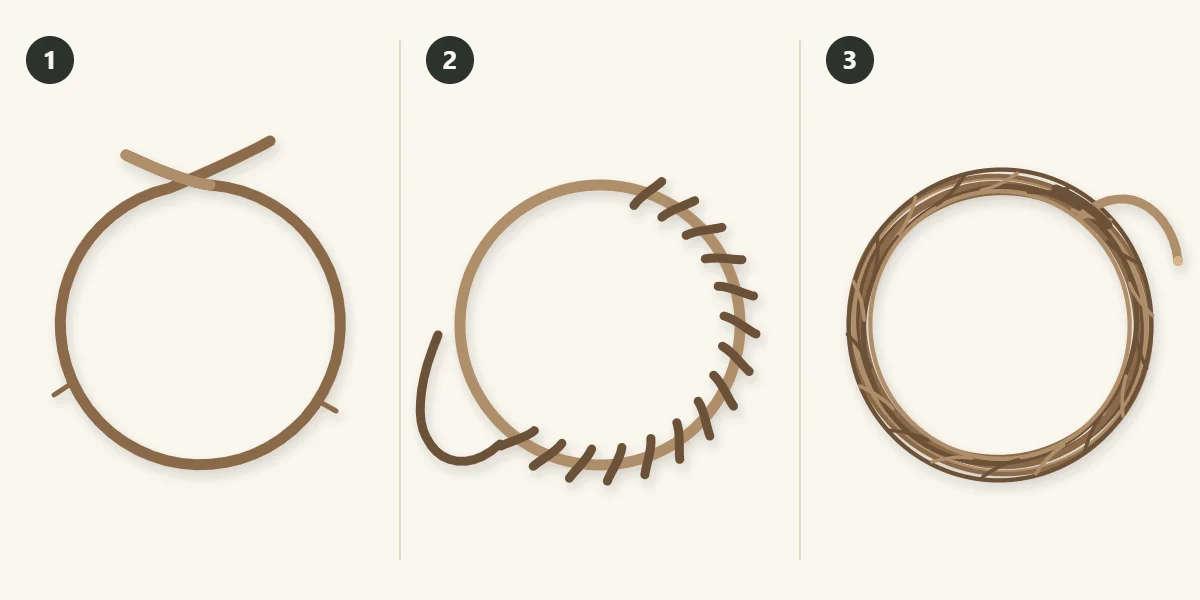
- Form the first circle. Take your longest, most even vine and bend it into a circle of the size you want, with the two ends overlapping by a generous hand’s length or more. Hold the overlap in one hand. If the vine is long enough, wind the loose end around the circle a few times so it locks itself. This first loop sets the diameter, so check it against a plate or a tape measure now.
- Wind a second vine around it. Tuck the thick end of a second vine into the circle, then spiral it around the first one, passing it through the center of the ring each time. Keep the turns long and relaxed, about a hand’s width apart. Tight turns kink the vine. Wind every following vine in the same direction, so the strands lie alongside each other like a rope.
- Build it up and tuck the ends. Start each new vine at a different point around the ring so the thick ends are not stacked in one place. Carry on until the ring is as thick as you want. Push every loose end between the strands, following the twist, until it is gripped. Snip off anything that will not tuck.
After every two or three vines, lay the ring flat and look at it from above. Press it back toward round with your hands while it is still soft.
Choose the Size and Thickness
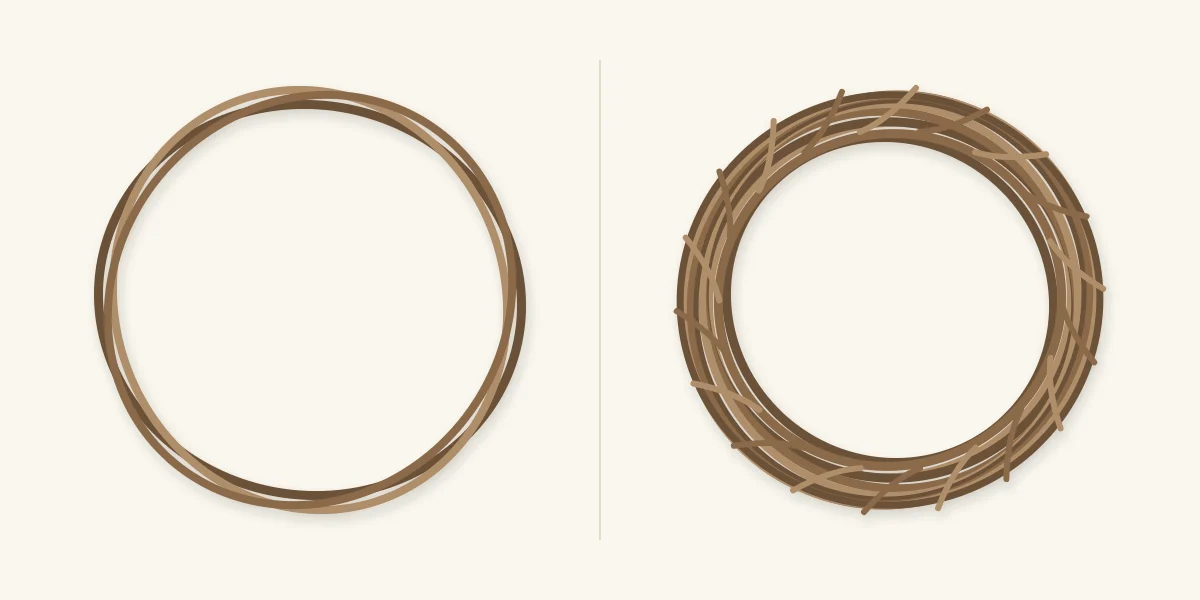
The diameter is set by the first loop and the thickness by how many vines you add. The two are independent: a ring of three vines and a ring of many vines can be the same size across and look completely different.
| Ring | Vines, about | Suits |
|---|---|---|
| Thin | 3 to 4 | Light sprays, indoor walls |
| Medium | 6 to 8 | Greenery and a few flowers |
| Thick | 10 or more | Full decoration, cones, bows |
For size, a base of about 14 in (36 cm) across is a practical first project. Smaller rings need thinner, more supple vines because the curve is tighter. Remember that the base size is the bare ring; decoration will make the finished wreath wider. The guide to wreath bases compared shows how grapevine sits beside wire, foam and straw.
Dry It Flat
Lay the finished ring flat on a surface where air can move around it, such as a wire rack or a few slats, in a dry place out of the rain. Hanging a soft ring from one point can pull it into an oval, so keep it flat until it is firm. Turn it over now and then so both faces dry evenly.
The base is ready to decorate when the vines feel hard and light, the ring keeps its shape when you lift it by one side, and the cut ends look dry. If you tied it in places to hold the shape, remove the ties at this point.
Tip
Vines shrink a little as they dry, so a ring that was snug when wet can loosen. Tuck any ends that have worked free once more before you decorate.
Common Problems
- Vines crack as you bend them. They are too dry or too thick. Soak them, or keep them for a larger ring with a gentler curve.
- The ring is oval. Reshape it while damp and dry it flat. Once dry it cannot be corrected much.
- Ends keep springing out. Tuck them along the twist, not across it, and under at least two strands.
Using and Displaying the Base
A homemade base can hang as it is, plain, from a hook that catches one strong strand at the top. Check the hook maker’s weight rating, and choose a covered spot, because damp softens dried vine and can encourage mold. Keep it away from candles, fireplaces and heaters.
When you are ready to add to it, the beginner method for decorating a grapevine wreath shows how to tuck stems into the twist. A thick ring is also a good foundation for a pinecone wreath, since wired cones can be twisted straight onto the vines.
Frequently asked questions
Do grapevines need to be soaked before making a wreath?
Freshly cut vines usually bend well without soaking. Vines that have stiffened can be soaked in a tub of water and tested from time to time. They are ready when a length bends into a circle without cracking.
How many vines does a grapevine wreath base need?
It depends on the thickness you want and how long the vines are. As a rough guide, three or four long vines make a thin ring and ten or more make a thick one. Keep adding until the ring looks right, starting each vine at a different point so it stays even.
How do I know when a homemade grapevine base is dry?
The vines feel hard and noticeably lighter, the cut ends look dry, and the ring holds its shape when lifted by one side. Dry it lying flat with air moving around it, and turn it over now and then. Tuck any ends that loosened as the vines shrank.